Intarsia 414
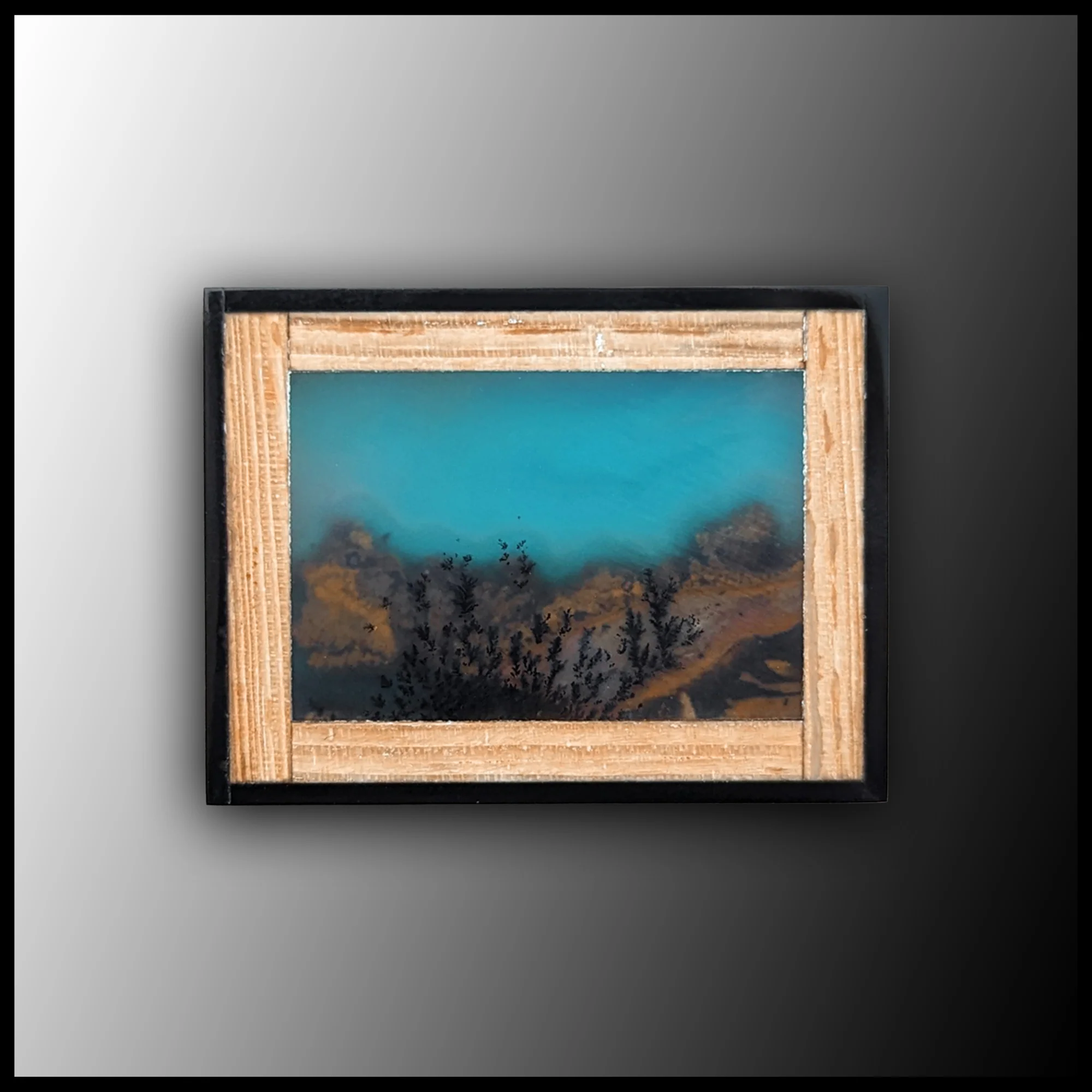
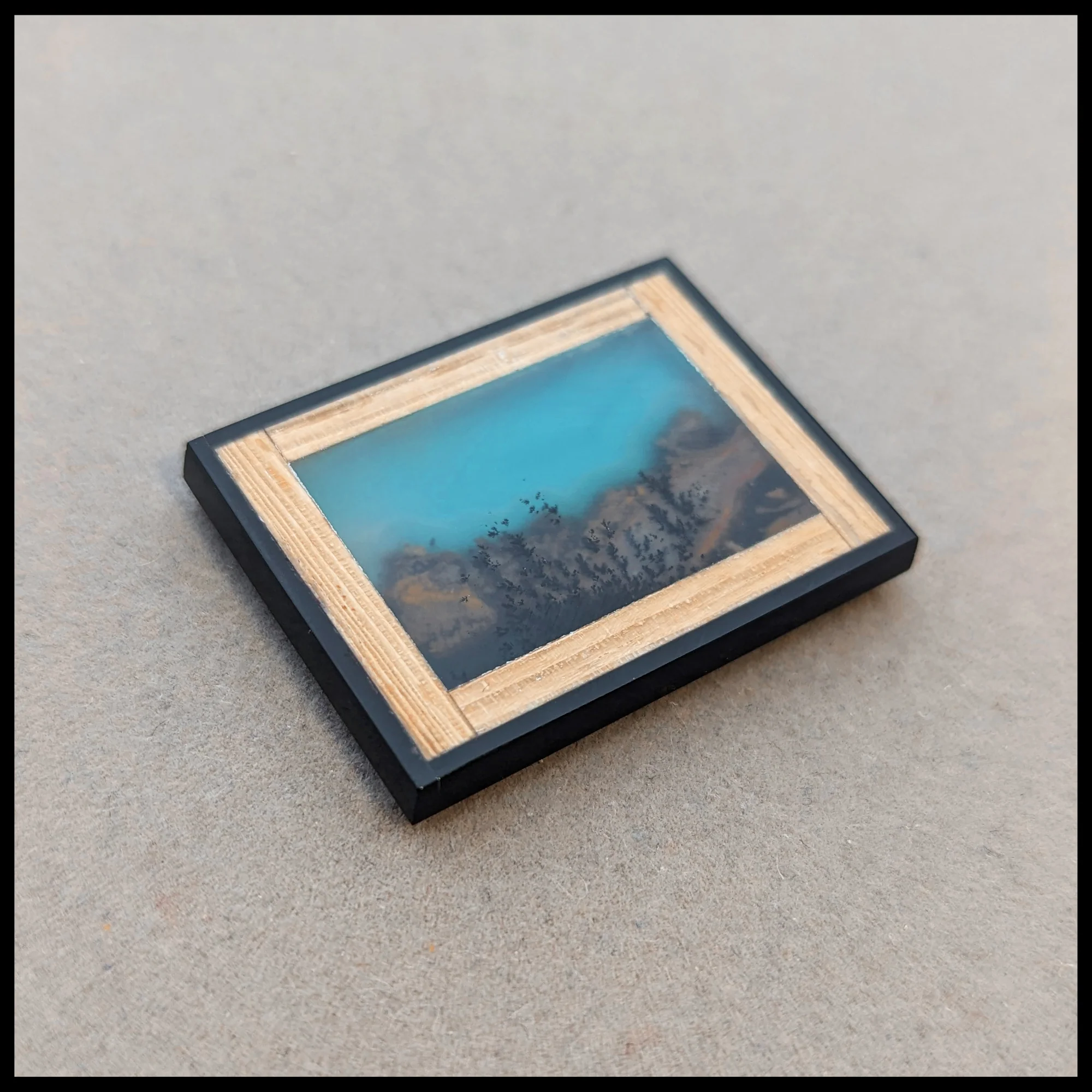
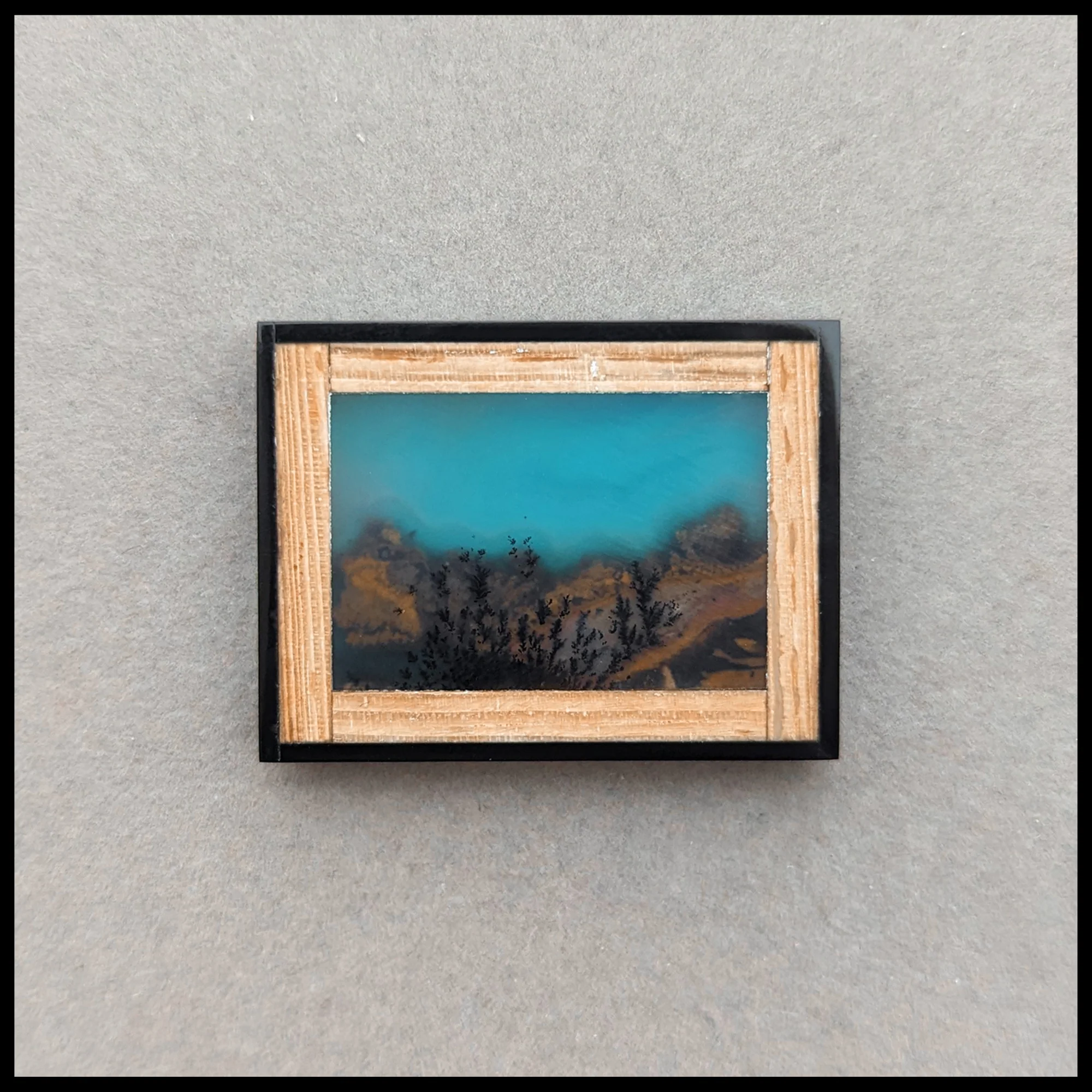
This polished intarsia contains multiple layers of stone, with the center containing Dendritic Agate, Del Norte Plume Agate, and Turquoise; completed with a double border frame and black backing. The cabochon is constructed from 12 individual pieces.
The three visible layers in the center are very distinct from each and creates nice contrast. The top layer of agate has strong black dendrites that act as foliage, with an otherwise clear agate that provides an even polish. The Del Norte Plume Agate creates the background and includes both plumes and matrix textures. The transparent section of the Del Norte agate has faint bands, that with the turquoise layer combine for a sunny blue sky with small cloud wisps.
Dendritic Agate
Del Norte Plume Agate
Turquoise
Black Basalt
Border:
Petrified Wood
Black Onyx
30mm x 39mm
Intarsia: The Gem Shop’s founder, Eugene Mueller, has an MFA in painting and has won awards in the Cutting Edge Competition® for his intarsia, and has crafted and/ or designed many of the pieces available here. For thousands of years artisans have been using stone, striving to create the most beautiful scene possible. This process is commonly referred to as Intarsia. Intarsia traces its history back to the Italian Renaissance, and was called pietra dura. This is a term for the inlay technique of using thinly cut and polished stones to create images. The stonework is glued stone-by-stone to a substrate after having previously been sliced and cut in different shape sections; and then assembled together so precisely that the contact between each section is practically invisible. Intarsia items are generally crafted on green, white or black base stones. Traditionally Intarsia pieces have a flat polish, but more contemporary pieces are more freeform and have a dome polish, and are often referred to as “composite cabochons.” Intarsia is a high expression of lapidary art requiring a close mastery. Each piece is eccentric and highly collectible – a true work of art.
Learn more about Intarsia and its history, as well as Gene Mueller's work and artistry in the technique.
Product Information
Product Information
Shipping & Returns
Shipping & Returns
Intarsia 414
Intarsia 414
This polished intarsia contains multiple layers of stone, with the center containing Dendritic Agate, Del Norte Plume Agate, and Turquoise; completed with a double border frame and black backing. The cabochon is constructed from 12 individual pieces.
The three visible layers in the center are very distinct from each and creates nice contrast. The top layer of agate has strong black dendrites that act as foliage, with an otherwise clear agate that provides an even polish. The Del Norte Plume Agate creates the background and includes both plumes and matrix textures. The transparent section of the Del Norte agate has faint bands, that with the turquoise layer combine for a sunny blue sky with small cloud wisps.
Dendritic Agate
Del Norte Plume Agate
Turquoise
Black Basalt
Border:
Petrified Wood
Black Onyx
30mm x 39mm
Intarsia: The Gem Shop’s founder, Eugene Mueller, has an MFA in painting and has won awards in the Cutting Edge Competition® for his intarsia, and has crafted and/ or designed many of the pieces available here. For thousands of years artisans have been using stone, striving to create the most beautiful scene possible. This process is commonly referred to as Intarsia. Intarsia traces its history back to the Italian Renaissance, and was called pietra dura. This is a term for the inlay technique of using thinly cut and polished stones to create images. The stonework is glued stone-by-stone to a substrate after having previously been sliced and cut in different shape sections; and then assembled together so precisely that the contact between each section is practically invisible. Intarsia items are generally crafted on green, white or black base stones. Traditionally Intarsia pieces have a flat polish, but more contemporary pieces are more freeform and have a dome polish, and are often referred to as “composite cabochons.” Intarsia is a high expression of lapidary art requiring a close mastery. Each piece is eccentric and highly collectible – a true work of art.
Learn more about Intarsia and its history, as well as Gene Mueller's work and artistry in the technique.
Original: $500.00
-65%$500.00
$175.00Product Information
Product Information
Shipping & Returns
Shipping & Returns
Description
This polished intarsia contains multiple layers of stone, with the center containing Dendritic Agate, Del Norte Plume Agate, and Turquoise; completed with a double border frame and black backing. The cabochon is constructed from 12 individual pieces.
The three visible layers in the center are very distinct from each and creates nice contrast. The top layer of agate has strong black dendrites that act as foliage, with an otherwise clear agate that provides an even polish. The Del Norte Plume Agate creates the background and includes both plumes and matrix textures. The transparent section of the Del Norte agate has faint bands, that with the turquoise layer combine for a sunny blue sky with small cloud wisps.
Dendritic Agate
Del Norte Plume Agate
Turquoise
Black Basalt
Border:
Petrified Wood
Black Onyx
30mm x 39mm
Intarsia: The Gem Shop’s founder, Eugene Mueller, has an MFA in painting and has won awards in the Cutting Edge Competition® for his intarsia, and has crafted and/ or designed many of the pieces available here. For thousands of years artisans have been using stone, striving to create the most beautiful scene possible. This process is commonly referred to as Intarsia. Intarsia traces its history back to the Italian Renaissance, and was called pietra dura. This is a term for the inlay technique of using thinly cut and polished stones to create images. The stonework is glued stone-by-stone to a substrate after having previously been sliced and cut in different shape sections; and then assembled together so precisely that the contact between each section is practically invisible. Intarsia items are generally crafted on green, white or black base stones. Traditionally Intarsia pieces have a flat polish, but more contemporary pieces are more freeform and have a dome polish, and are often referred to as “composite cabochons.” Intarsia is a high expression of lapidary art requiring a close mastery. Each piece is eccentric and highly collectible – a true work of art.
Learn more about Intarsia and its history, as well as Gene Mueller's work and artistry in the technique.